


Speech of the Month, October 2026 - Andrew Griffith
Andrew Griffith didn’t deliver the worst speech ever, just one so flat his audience didn’t realise it had ended.
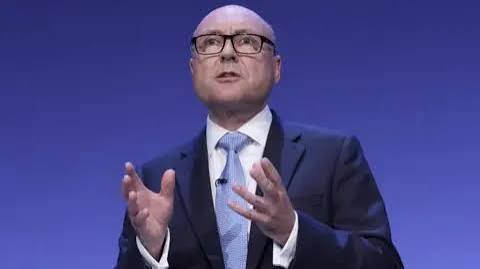
“Speech of the Month” has always put a spotlight on a standout speech and asked what the rest of us can learn from it. But when a speech is branded the “Worst Speech Ever”, it simply has to take the crown, even if it doesn’t meet the usual criteria.
So who delivered this historic atrocity? Andrew Griffith, the shadow chancellor, at the Conservative Party Conference. Given its damning critique, I rushed to watch it, and I must confess: I was disappointed. Not in Griffith, exactly, but in the lack of carnage. The speech wasn’t great, but having sat through dental and IT conferences, I can say with authority that it wasn’t the worst ever. Had Griffith spoken at one of those, he’d have been the star of the show. If you’ve got 20 minutes to spare, do take a look. But bar the ending, there’s little here to make you LOL.
Here’s what I’d say he got right, and what most corporate speakers could happily copy:
- He looked comfortable and pleased to be there. Given the number of empty seats, this was heroic.
- He took a page from Burnham’s book and ditched the lectern. Brave.
- He used no visuals. I know party conference speakers rarely do, since this is oratory in its purest form. But I’d bet that in his former life as a business exec, every sentence came with its own slide. Here he proved that visuals are rarely necessary and rarely add anything. Your slides are not the main act, and they should stop auditioning.
And now, where there’s room for improvement:
- Pace and volume. Party conference speeches have something most speeches don’t: applause moments, those lines engineered to let the faithful clap and cheer. Sadly, Griffith’s pace and volume were so muted that the audience didn’t realise they’d just been handed one. He paused expectantly, got silence, and on several occasions had to gesture for applause. Rather than leaving them hungry, he was begging for scraps. Not a great look. It also wrecked his ending. After what his speechwriter clearly considered a stirring peroration (“Every generation has its destiny - this is ours!”), his flat delivery meant the audience didn’t realise it was over. So he shuffled off stage, to the sound of a room wondering whether there was more.
- Facial feeling. His expression barely changed. It needed to. If you’re talking about a bright future, your face should radiate optimism; if you’re lamenting the government, you should look suitably contemptuous. Basic stuff, but essential stuff.
- Shuffling. I commend him for ditching the lectern, but the trade-off is that the audience can see every millimetre of you, which multiplies the opportunities for distraction. If there’s no lectern to hide behind, control the shuffling (his sin), the swaying and the fidgeting. Know what your body is doing, because it’s broadcasting something.
And yet, poor Andrew Griffith has one problem I’m not sure any coaching can fix: he’s a dead ringer for Gregg Wallace. That may not be as problematic as being Hitler’s double, but it’s hardly a blessing.
So, was it the worst speech ever? No. Was it a masterclass? Also no. It was something far more useful: a free case study in how good instincts (no lectern, no slides, no hiding) can be undone by flat delivery. For help with sparkling delivery, get in touch.


“Emma delivered 'Making Your Mark in Meetings' virtually for the council. Attendees thought the workshop was excellent; describing it as highly useful and enjoyable. Not that this came as a surprise. Emma has been successfully delivering workshops for me for over a decade!”